

中国杭州西溪第二届湿地论坛论文摘要选编7
来源:湿地中国时间:2009-08-29 00:00:00
小中大
字号Wetland restoration and biodiversity conservation
of Lake Dianchi
Yang Junxing Wang Li Chen Xiaoyong Cui Guihua Shu shushing Du Lina
Kunming Institute of Zoology, Chinese Academy of Sciences
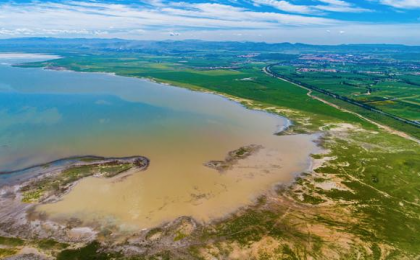
Lake Dianchi was formed in 3.4 million years ago. The lake is now situated at the watershed among Changjiang River, Honghe River and Zhujiang River. Dianchi is a hotspot for biodiversity because of its richness in aquatic biodiversity, unique origination and special plateau aquatic ecosystem. Since 1970s, freshwater biodiversity declined sharply as the result of water quality degradation, habitat destruction as well as the invasion of alien species. In order to save the lake biodiversity of global importance, Kunming Institute of Zoology was granted by GEF in 2003 to restore the lake wetland and biodiversity.
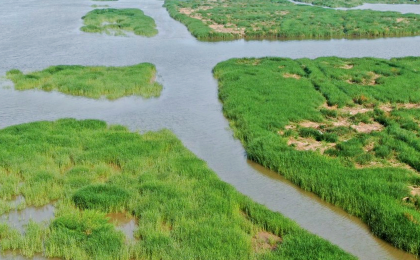
Three pilot sites were set up for the wetland restoration activities, representing three different types of wetlands. Macrophytes, mollusks and fishes were given a special priority in the restoration activities. Among the three types of organisms, those species with aesthetics, endemism and economic values are particularly favored. In the pilot site Baiyukou, emergent macrophytes were planted as well as some submerged ones. An exciting result was that the famous submerged macrophyte Ottelia acuminata replanted in Baiyukou site seemed growing very well. Some indigenous bivalve Anodonta were cultivated in the site. In the other two pilot sites, Xialiangwang, the submerged macrophytes are designed as the major plants for the restoration activities.
Results from field surveys and monitoring throughout the basin revealed some relict biodiversity spots, Dragon springs in Buddhism temples. These refugee springs inhabited some endemic species that were once supposed to be extinct. For these relict populations of endemic species, both in situs and ex situs conservations were undertaken. An ex situs conservation base with 15000m2 was set up for cultivation and breeding of these relict endemic fishes and macrophytes. These refugee springs were also set up as protected reserves for in situs conservation.
Buddhism played a key role in protects the relict population of the endemic species of Dianchi. However, some religion releasing of life introduced alien species to these refugee spings inhabited endemic species. In order to improve the behavior of religion life-releasing, our research team worked together with Buddhism association. The first out coming of the cooperation is publication of the book Buddhism
上一篇: 山喷发与气候变冷有关吗
下一篇: 沿运湿地:自然生态美